- Place
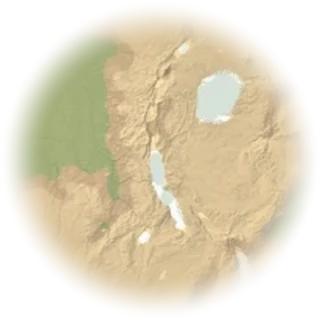
- Gombe National Park, Tanzania
- Timeline
- 2026
- Clients
- Jane Goodall InstituteOde
- Role
- Developer, designer, and data scientist in partnership with Ode
- Services
- AI
- Product
- Design
- Engineering
- Data
- Strategy
- years of field records from Gombe, Tanzania
- 65
- accuracy of digitizing paper behavioral grids
- 99.9%
- siloed archival databases aggregated
- 7
- hours of observation aggregated
- 600k
01
Overview
For 65 years, researchers at the Jane Goodall Institute have studied wild chimpanzees in Gombe, building the longest-running primate study in the world.
At Gombe, Jane found that our closest relatives make tools, wage war, and act altruistically. Researchers continue to uncover the origins of human evolution and disease outbreaks. But most of that knowledge lives on paper.
Working with JGI, Ode, and AWS, we built an AI-powered platform that turns handwritten field records into structured, searchable, research-grade data, and a shared workspace for every scientist in the Gombe research consortium.
02
Paper, years behind
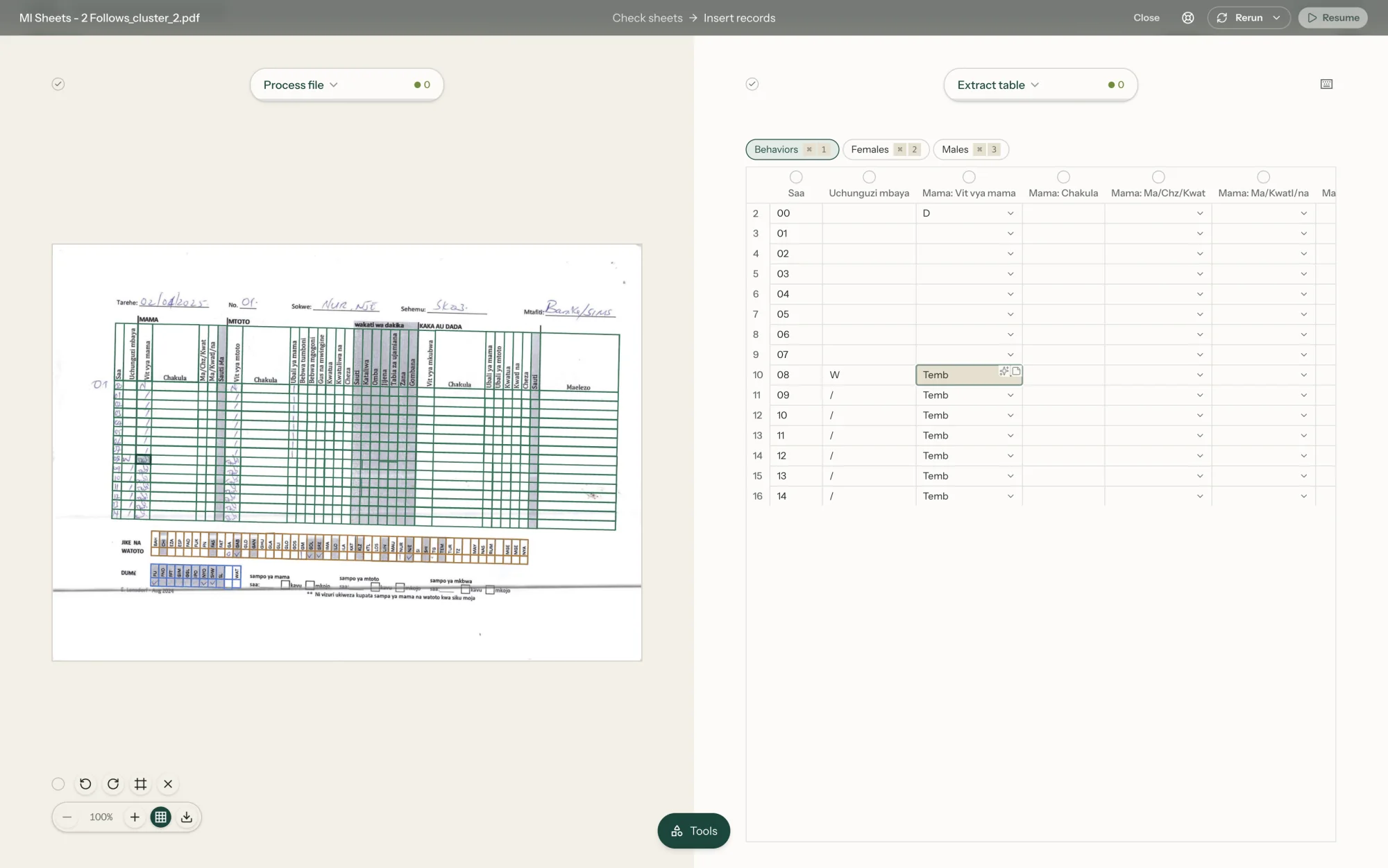
Field staff record behavior on paper throughout each day, while crawling through forest and wading streams. After researchers fly boxes of sheets to the US, students transcribe every cell, send translation requests to a domain expert, and load extracted behaviors into a database. With a paper backlog of seven years, a disease could spread long before it shows in the data.
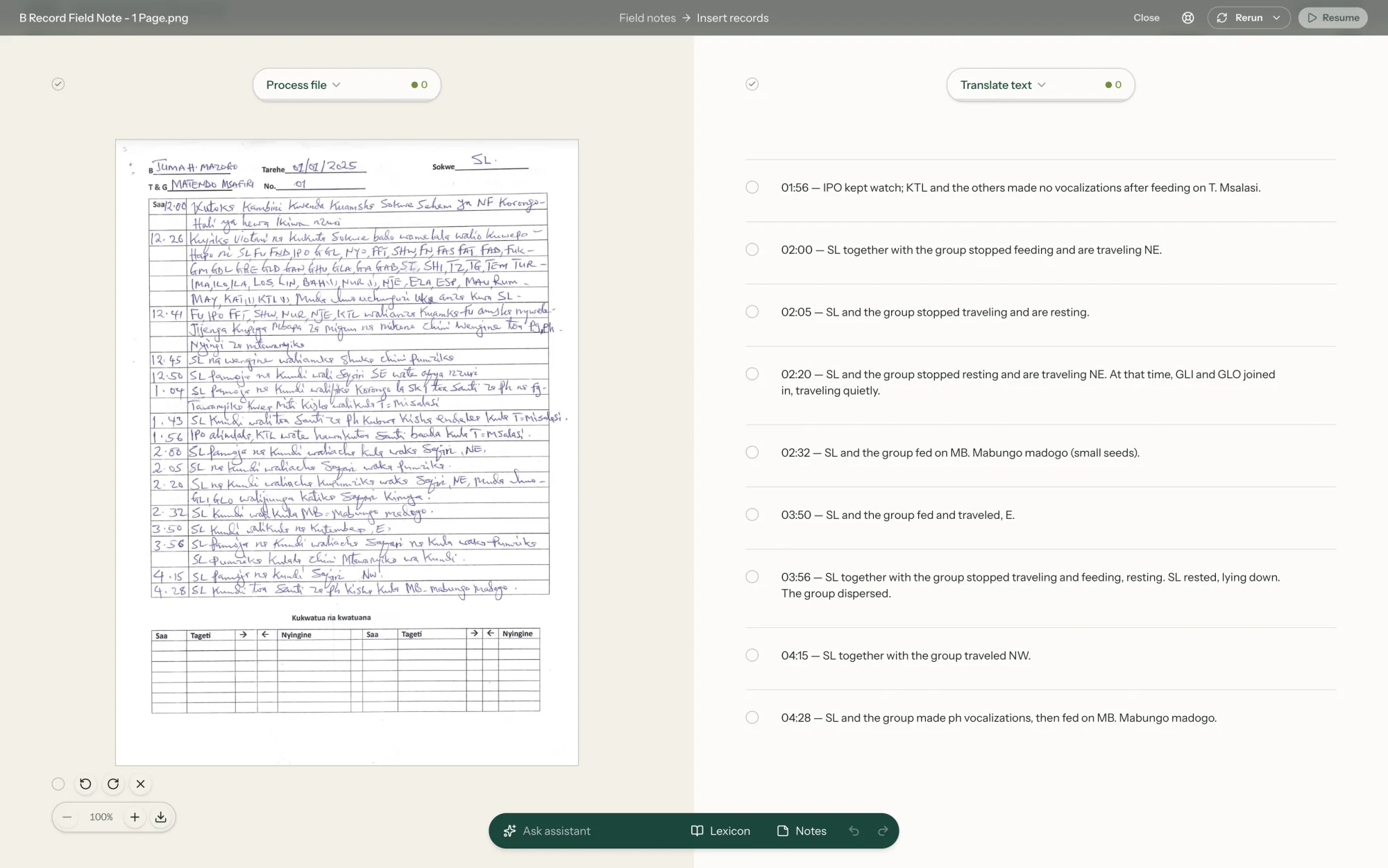
Discovery interviews and workshops revealed the most pressing need: bring data in from the field more quickly, and break down the silos of each researcher hosting their own data sets. But decades of faded ink, detailed grids, evolving conventions, and Swahili terms required a sophisticated approach to preserving research-grade accuracy.
03
From paper to data
Each sheet runs through a pipeline that reads the text, translates it, and extracts chimpanzee behaviors into structured data. Any uncertainty is flagged for researchers to review and edit. Through rigorous evaluations of thousands of labeled examples, each test document was processed with nearly 100% accuracy.
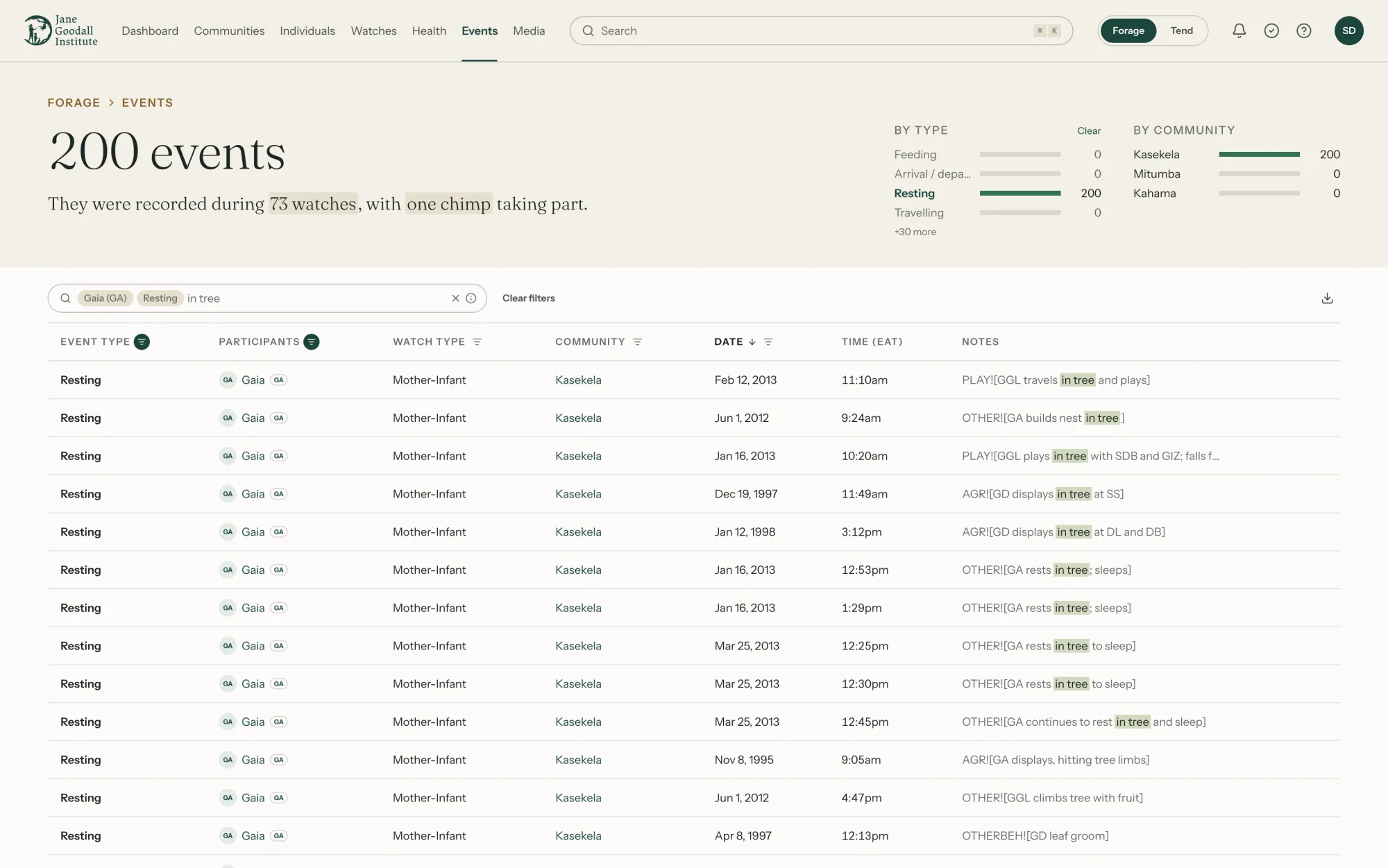
I carefully aggregated seven archival databases and rearchitected them to share a common roster of chimpanzees, communities, and domain-specific codes. Hundreds of data quality checks run each night, delivering a report of LLM-summarized recommendations. Data stewards govern access and changes to their data sets.
04
A living archive
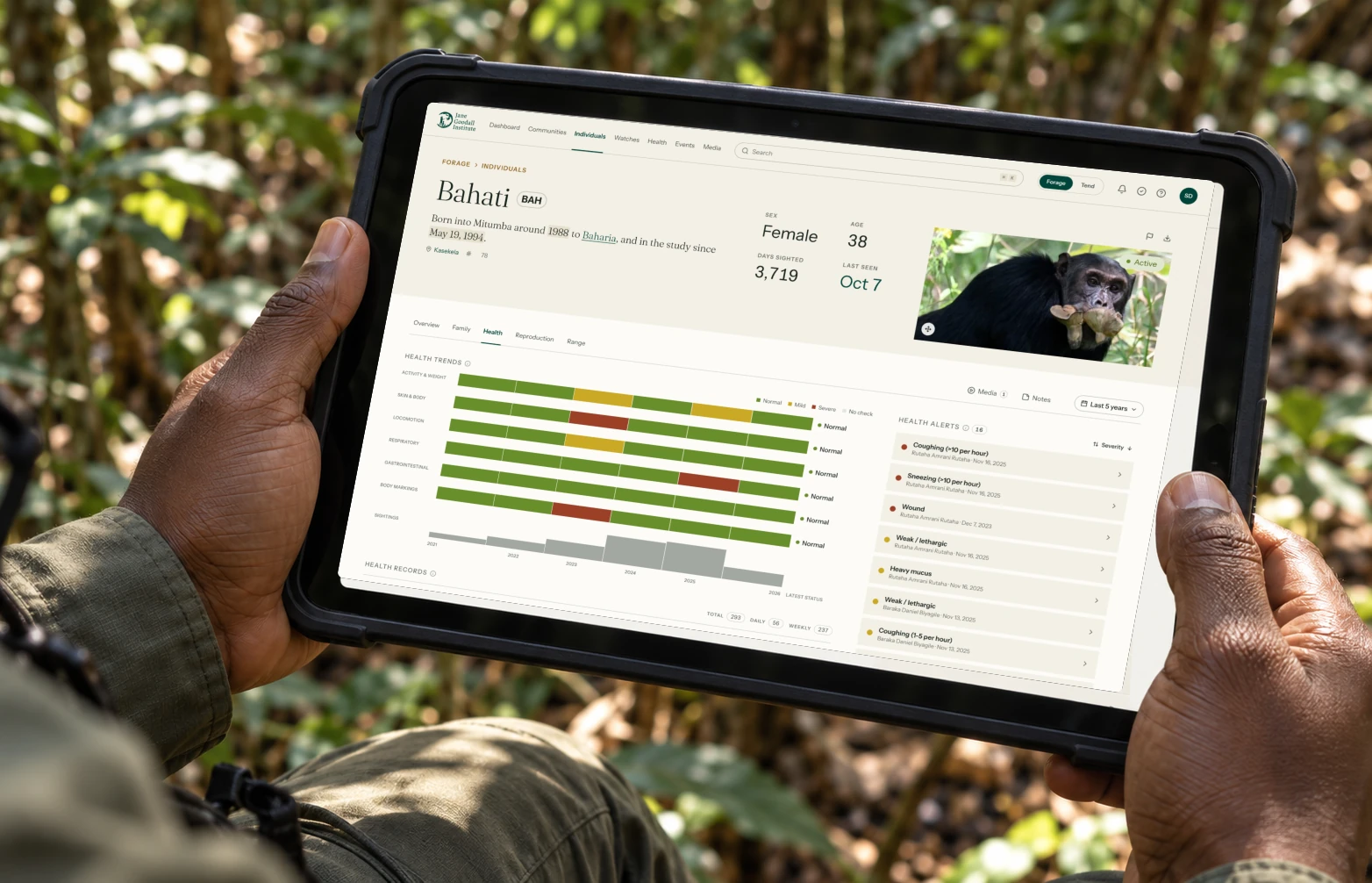
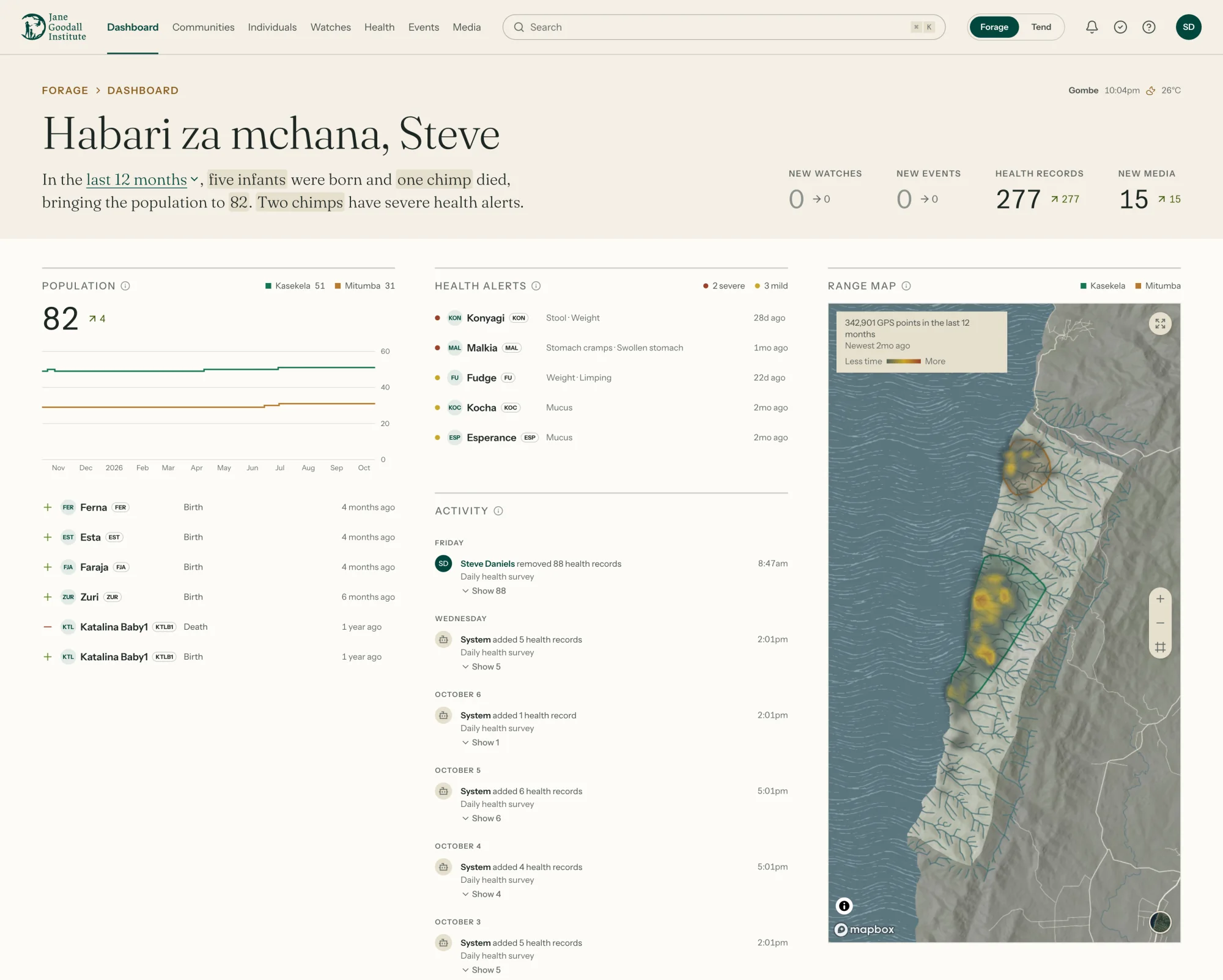
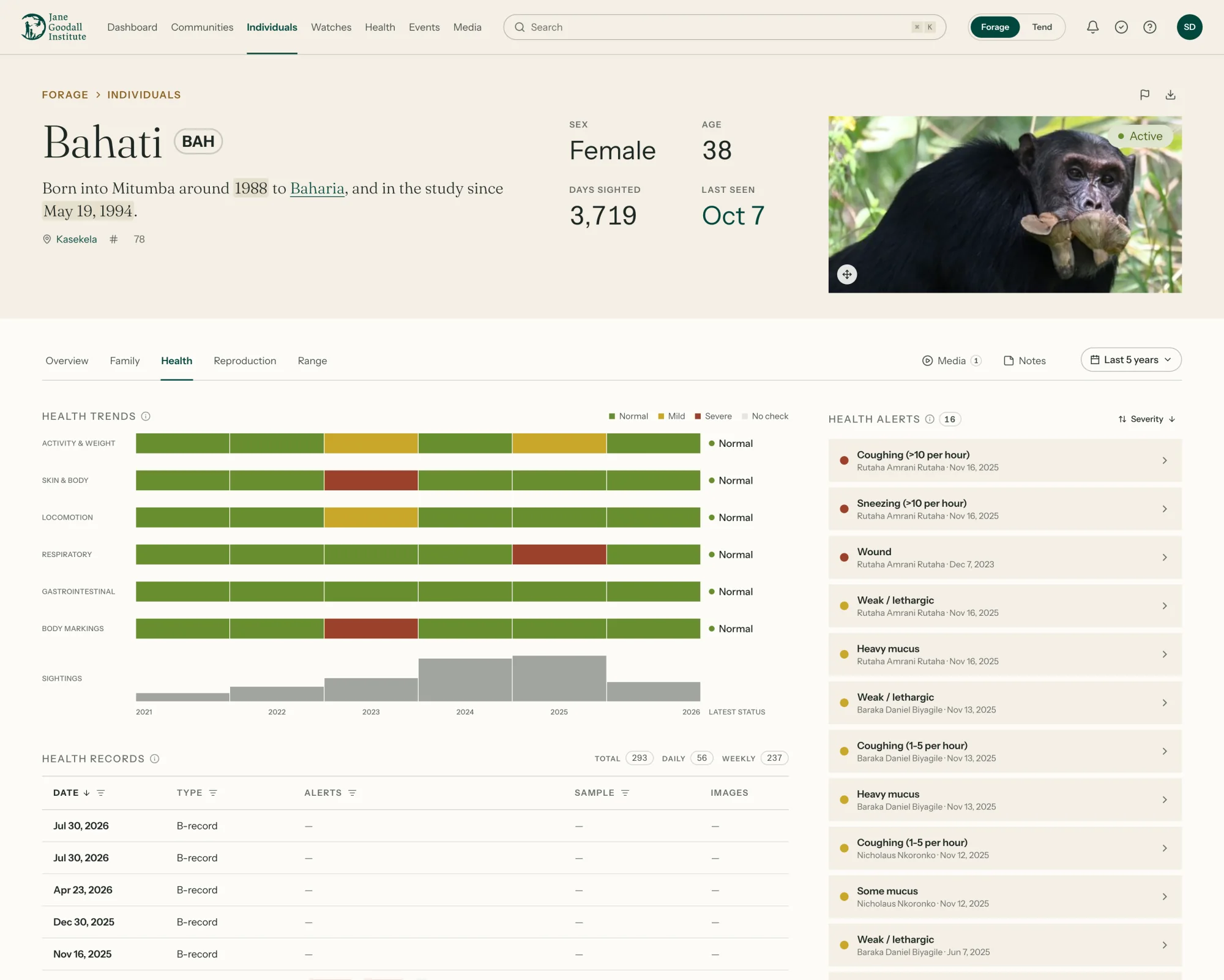
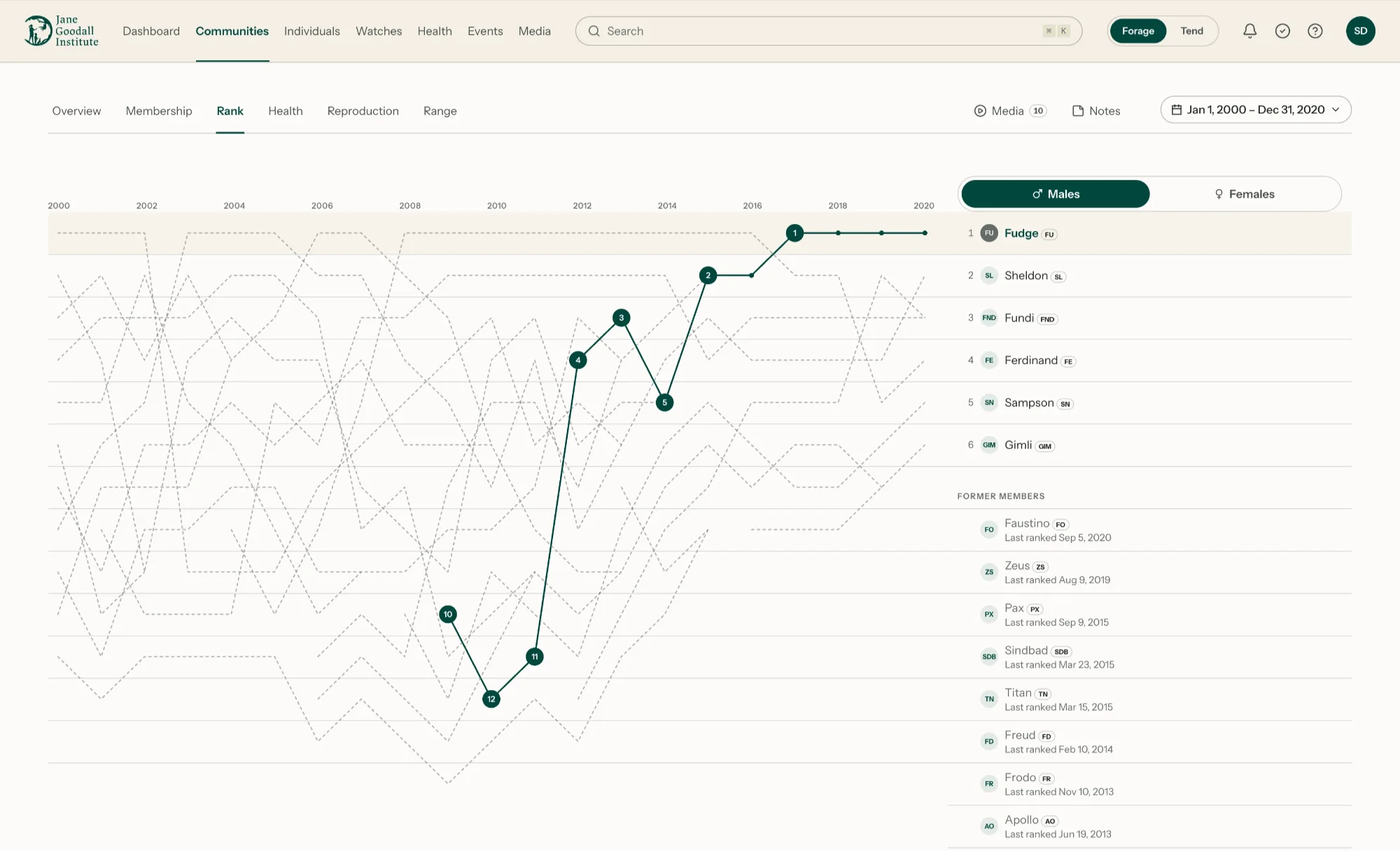
The platform gives every chimp a profile with their family tree, health history, and social and mating partners. Community views track population and dominance over time. Behavior and health data once held by separate groups now sit side by side.
For the visual design, I drew inspiration from the paper legacy of Gombe and brought it into a clean design system emphasizing clarity and trust.
Sixty years of a community
The population timeline replays every birth, death, and move between communities since the 1960s.
05
What’s next
With the platform live in production, the researchers are now processing their backlog of field data. Students are shifting their time toward review, analysis, and their own research questions.
We are continuing to work with the Jane Goodall Institute on extensions of the platform into remote sensing, geospatial AI, and a public educational experience built on the platform's data foundation.